continued from Chapter 2
If we consider Gospelypso as a Sub-Genre of Calypso, we can refer to a
phenomenon which Toelken has termed "The Spectrum of Dynamism." This Spectrum
of Dynamism can be used as a model to explore the development of an artform
within a given culture over a period of time. It shows Conservatism at the
one end and Dynamism on the other of a continuum which is representative of
the passing of time.
"Conservatism refers to all those processes and forces that result in the
retaining of certain information, belief, styles, customs and the like, and
the attempted passing of those materials, intact, through time and space in
all the channels of traditional expression. Dynamism at the other extreme
comprises all those elements that function to change features, contents,
meanings, styles, performance and usage as a particular traditional event
takes place repeatedly through space and time."[Toelken: 1970. 34]The
emergence of Gospelyso demonstrates this movement from the traditional to
the dynamic, with Calypso being considered as the traditional and Gospelypso
as the Dynamic
It is never easy to define a musical phenomenon. However, some
attempt at a definition is obligatory as it will facilitate a deeper
understanding and a greater understanding of the artform in
question.
The term "Gospelypso" was coined more than 21 years ago and
represents a fusion of gospel lyrics and calypso rhythm. [Gospelypso:
A Profile]
Essentially what this suggests is that any choruses or even hymns
which are done with a calypso type beat running throughout the song
can, in the strictest sense of the word, be termed a Gospelypso. By
extension therefore, the first church to have explored the changing
of the beat of the traditional hymns, may be accredited with having
introduced Gospelypso.
Due to the fact that we are a Caribbean people, it is not at all
surprising that there would be churches which would adapt the music
of the traditional churches to the calypso beat. However, as this
Spectrum of Dynamism suggests, no artform can stagnate and features
must be added and subtracted in time. These added features do not in
any way suggest that it is no longer the intended artform. In the
development of the artform, and for the purposes of the competition,
further restrictions were placed on what really could be considered
a Gospelypso. These specifications must also find their place in the
definition of Gospelypso. Such restrictions include that the
selections must be original compositions. This has to date become an
important factor to be considered in the definition of Gospelypso.
Another important element is the language of the text.
Through the study of folk etymology we can understand the uniqueness
of the language of Trinidad and Tobago. The language is different
from what could be considered as the "Queen's English". It carries
its own rules of grammar and pronunciation.
·
There are many faces which have graced the "hallowed halls" of Gospelypso. Faces which have often gone unrecognized because they have been masked by more prominent figures. Such faces include Larry Harewood, Keith and Merle Telesford, Herman Brown, Vernon Clarke, Mrs. Greaves and George Livingstone. Some of these early pioneers no longer perform Gospelypso, but there are still those who remain to add that touch of "vintage” to the music.
One such person is
George
Livingstone, who has been a member of all of the popular groups in Gospelypso including
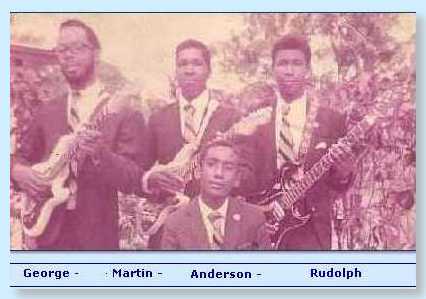
The Golden Gates Combo was a group which came out of the Pentecostal
United Holy Church of Nepaul Street, St. James. This was the first
recognized Gospelypso group. However, it was an instrumental group,
the music which they did therefore was the traditional hymns in a
calypso style. The leader of this group, Mr. George Livingstone,
comments that the reason
 or
their unwillingness to compose original songs lay in the simple fact
that they were an instrumental group and as such were inhibited by
the fact that any songs which they did would have to have a melody
which could easily be recognized by the religious public. The songs
which they did should not be taken for Calypso. The reluctance of
this group to compose original songs can be understood in light of
the fact that the only element which separates Calypso from
Gospelypso is the text. This group consisted of George Livingstone,
Martin Lee, Anderson Collymore, Rudolph Mills, Oliver Cox, Ian
Haywood and Carlton Griffith. They were recognized because they
performed in local concerts and had even had the opportunity to
perform their indigenous music in Barbados. The Golden Gates Combo
proved that this music could be enjoyed under the banner of
righteousness.
or
their unwillingness to compose original songs lay in the simple fact
that they were an instrumental group and as such were inhibited by
the fact that any songs which they did would have to have a melody
which could easily be recognized by the religious public. The songs
which they did should not be taken for Calypso. The reluctance of
this group to compose original songs can be understood in light of
the fact that the only element which separates Calypso from
Gospelypso is the text. This group consisted of George Livingstone,
Martin Lee, Anderson Collymore, Rudolph Mills, Oliver Cox, Ian
Haywood and Carlton Griffith. They were recognized because they
performed in local concerts and had even had the opportunity to
perform their indigenous music in Barbados. The Golden Gates Combo
proved that this music could be enjoyed under the banner of
righteousness.
Born out of a desire to communicate the gospel to an indigenous
Calypso- loving people through a music naturally their own,
Gospelypso comes forth to make its voice heard amidst the din of the
contemporary American-styled gospel music. Popularized by Youth For
Christ [a body of Christians concerned with spreading the gospel,
their main targets being the youth]. Gospelypso has been the
heart-beat of an indigenous Calypso loving people, the way in which
they can express themselves in their own style. John Blacking, in
his book “How Musical Is Man” speaks about this link between music
and culture: "We must recognize that no musical style has "its own
terms”: its terms are the terms of its society and culture, and of
the bodies of the human beings who listen to it and create it and
perform it.” (Blacking: 1973.25)
Youth For Christ was heavily dependent on music in those early days,
hence the great desire to include a musical package which would be
an extension of their mission.
The first Gospelypso Rally was held
in Greyfriar's Hall on Frederick Street, on February 5th, 1972, at
6:59 p.m. Youth For Christ there presented a package of local people
singing gospel songs. According to Rev. Lealand Henry, who at that
time was the choir director of the Youth For Christ, this was the
first time that such a presentation of the gospel in Calypso style
was done. (Personal interview with Rev. Lealand Henry, 21st February
1995). This first presentation was not competitive, but rather it
was simply a presentation of the gospel by people whose only gains
were seeing persons converted to Christianity and seeing them
appreciate a style which was typically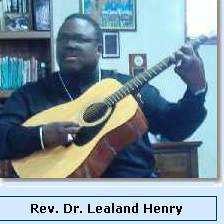 Trinbagonian.
At this time, the only show which features Gospelypso alone, [as did
this early show in Greyfriar's Hall] is the annual Gospelypso
competition which is sponsored by Youth For Christ.) The 1972 show
featured completely original songs primarily along the theme of
Salvation.
It is only in recent times that experimentation has been
done outside of the direct line of Salvation. Some songs which were
presented there for the first time were "We shall walk the streets
of gold" and "Saved from the Great Fire". Rev. Henry attests to the
fact that the response to this initial event was very good. He also
claims that Christians were in the minority in this gathering
[Personal interview with Rev. Lealand Henry, 21 February 1995]. As
such, the people who were there did not have the biases and the
traditional mind-sets which were and are so common in some societies
today, and they were very open to accept this music which they
thought to be Calypso but which revealed itself upon further
examination to be Gospelypso. Unfortunately, this was not the case
in the early days as far as the Christian community was concerned.
Pioneers such as Francis Warner admit that while singing in a
particular church, there was a disturbing "exodus" of the
congregation. People left because they did not agree with calypso
being used in a sacred setting. As is to be expected, the artform
wasn't as developed as it is today and this is evident even in the
instruments which were used in that first show. Only the basic
instruments, such as a keyboard, a bass and a drum-set were used.
The recent shows have included on their list of instruments, a live
brass section and many electronically programmed instruments,
including a drum machine. Unfortunately, the compositions were not
recorded, so there is no source by which we can verify the texts or
the melodies but by the recollection of the participants
themselves.
The gospel in kaiso form had its
opportunity to be heard in other Caribbean islands when members of
Youth For Christ such as Lealand Henry and Keith Telesford began
traveling to other islands to bring the good news of the gospel in a
Caribbean way to a Caribbean people. People in islands such as
Antigua, Barbados and Jamaica related this type of music to what
they had heard from artistes such as Joseph Niles, who did not sing
Gospelypso as it is known today, but rather sang a form of music
which is known as "spooge". However, the major difference which
should be noted is that Joseph Niles, for the most part, simply
adapted the traditional hymns to this genre of music, whereas what
the islanders were hearing was completely original songs done with a
Calypso beat, with a Gospel message. To date, this has remained one
of the major factors in the Gospelypso competition.
Earl Phillips testifies of his tour to the United States which was
made with a musical ensemble known as the Gems. He recalls that the
group had gone with a repertoire of Dallas Holmes’ songs and one
Gospelypso, composed by the Panther. The title of this song was
"Give me water Jesus I'm thirsty" . The reaction of the crowd to
this selection was such that it encouraged the group to stay on
longer than had been planned formerly. The American audience was
very appreciative of the new genre of music known as Gospelypso.