DIACHRONIC STUDY OF THE EVOLUTION OF GOSPELYPSO IN TRINIDAD AND TOBAGO

A 1995 Thesis by Rochelle Livingstone - Lewis
Chapter 5
GOSPELYPSO AS CULTURE
continued from Chapter 4
Many definitions of Culture have been offered throughout the years, ranging from the conservative to the all-embracing. For the purposes of this dissertation however, it is necessary to establish one, for it is by this definition that we can then examine what is the "culture" of the island and to what extent Gospelypso can be considered as part of the cultural milieu of the island. In light of this also, we can examine the reasons why it has taken so long for this artform to gain even minimal acceptance into the religious mainstream of the region. Christopher Dawson in his book “Religion and Culture”, describes culture as, "an organized way of life, based on a common tradition and conditioned by a common environment." (Dawson; 1958.)
Sir. Edward Tylor proposed in 1871 that, "Culture is that complex whole which includes knowledge, belief, art, laws, morals, custom, and any other capabilities, and habits acquired by man as a member of society," Spradley suggests that, the acquired knowledge that people use to interpret experience and to generate social behaviour."
(Primitive Culture 1871, rpt,1958). One main idea can be found in all these definitions of culture. that is Culture is a product of the social processes which include transmission, retention and innovation as much as it is a part of these very processes. Thus, Culture is a reflection of the society. One theorist has referred to music as "sound behaviour". We can trace the origins of Gospelypso back through the history of the island.
As Calypso embraces the dreams of the slaves, their hopes for freedom from "massa" so does Gospelypso embrace the dream of the Christian who once was in a state of spiritual slavery. As the natural slave beat the drums and the rhythms of Africa pierced through the spirit of bondage, similarly we are reminded of the spiritual slavery to which the Christian refers. The rhythms and the melodies symbolize his dream for complete salvation, which can only be achieved when he is removed from this earth-system. Gospelypso is the Trinidadian's cultural expression of his "Christian selfhood".
Gospelypso is a result of the waves of immigration and the processes of transmission and retention which took place in the island of Trinidad. At this time, it is mostly a syncretism of the African/European/Afro-American aesthetics merging with the Trinidadian aesthetic to create an artform which is at the same time old and new.
Elements of this blending is evident from the African rhythms, the European-based lyrics, the melodic and harmonic melody lies and the body movements which are reminiscent of the dance and drama of the Afro-American.
The question can be asked, "If Gospelypso is enshrined in the cultural heritage of the island, why is there a reluctance for the artform to be accepted by the religious majority as an inherent part of our religious heritage?
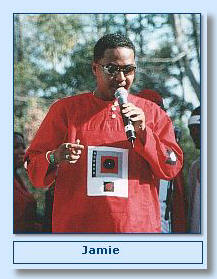
Firstly, by what meter do we measure the degree to which Gospelypso has been accepted in the society? If we use the local media as an indication of the success of the music in the industry, it is easy to recognize that there are no programmes which play Gospelypso alone. There is one programme which airs on Radio 105 FM, the name of the programme is "Caribbean Light" and is hosted by Jamie Thomas and Fern Chase. However, this programme has had to include all types of Caribbean music and stress has not been placed on Gospelypso. At the present time, the artform has therefore not been very successful in gaining wide-scale acceptance in the society.
 One "informant" Noel Richards was one of the hosts of one such programme (the other was Nicole Ballosingh) which had to be canceled because of a lack of sponsorship. Mr. Richards also admitted that in the production of the cassette "We Ting"
cassette featuring Noel Richards and Maralyn Joseph) There was great difficulty to get businesses to invest in the project. This he attributes to the "newness" of the artform. (Personal Interview with Noel Richards 22nd February 1995) This question of "newness brings us face to face with one major paradox of Culture.
One "informant" Noel Richards was one of the hosts of one such programme (the other was Nicole Ballosingh) which had to be canceled because of a lack of sponsorship. Mr. Richards also admitted that in the production of the cassette "We Ting"
cassette featuring Noel Richards and Maralyn Joseph) There was great difficulty to get businesses to invest in the project. This he attributes to the "newness" of the artform. (Personal Interview with Noel Richards 22nd February 1995) This question of "newness brings us face to face with one major paradox of Culture.
Kenneth Bilby has described the culture of the Caribbean as possessing a "simultaneous newness and oldness" (Bilby 1985.) In his terms "creolization" is the process by which two or more older traditions blend on new soil. This "Creolization" process is what has taken place as regards the music of this thesis: Gospelypso.
There are many paradoxes which face us concerning culture. Many advocates for Gospelypso claim that change is a necessary part of growth and development. Many dissenters, however, agree that culture is about stability. They maintain that conservation of the established norms is the only guarantee against infiltration of outside elements which would serve to pollute to pollute the "pureness" of the established value system.
Such a view may be predominantly taken especially in religious settings, where the emphasis is on discipline and decorum, which in the minds of some equals preservation "to the letter" of the value system and even of the original musical forms. We must attempt to resolve, or at least treat this dichotomy of views. How is this dualism handled by the experts in the fields of Anthropology and Ethnomusicology? Alan Merriam says, “The statement that culture is dynamic is as commonplace in Anthropology.. [and it is] equally applicable in Ethnomusicology. No matter where we look, change is a constant in human experience although rates of change are differential from one culture to another and from one aspect to another, no culture is also stable, that is no cultures change wholesale and overnight, the threads of continuity run through every culture, and thus change must always be considered against a background of stability.” (Merriam: 1964.62)
Melville Herskovits asserts that:
1."We cannot too often emphasize the fact that no living culture is static.”
2 “Change, then is a universal cultural phenomenon and the process of change over a period of time constitutes the process of change.”
3.“Conservatism and Change in a culture are the result of the interplay of environmental, historical and psychological factors.”
What has therefore taken place in the local church in terms of musical change and the reaction of people is not an especially unusual phenomenon in terms of Cultural Dynamics. What theorists suggest is that change is an inherent part of constancy and culture. We have found that we cannot resolve this paradox, but rather we can use theories to confirm that the case of Gospelypso is not unique and does not necessarily have anything to do with a moving away from “spiritual concepts”. because the music is becoming absorbed into the musical system of the geographic location. It is still gospel, but now it is gospel within the perimeters of our local culture.
 Enculturation is described by Herskovits as “the aspects of the learning experience that mark off man from the other creatures, and by means of which he achieves competence in his culture”. (Herskovits: 1966.24) Enculturation, is therefore, as it should be, a natural part of the socialization process. In light of these functional definitions, we can say that many traditional Christians, upon hearing Gospelypso suffer from a mild “culture shock”, even though the rhythms are not unfamiliar to them.
“Culture shock is a form of anxiety which occurs when one is required to interact with others in a cross-cultural situation.” (Spradley: 1975.62) The context may appear the same, seeing that the listener is not hearing the music of another National Culture for the first time but they do however have problems of adjustment occasionally because the music is not from the assumed culture of the Christian.
There is a trend in theology of recent times which has come to be known as “Local Theology”. In his book “Constructing Local Theologies”, Robert J. Schreiter comments: “There has been an important shift in perspective in theology in recent years. While the basic purpose of theological reflection has remained the same- namely the reflection of Christians upon the Gospel in light of their own circumstances- much more attention is being paid to how these circumstances shape the response to the Gospel. Despite slightly different nuances in meaning, all these terms ( localisation, contextualisation, indigenisation, inculturation) point to the need for and responsibility of Christians to make their own response.” (Schreiter 1985.1)
One Gospelypsonian: Earl Phillips, Guitarist, in speaking on the validity of the artform quotes from The Holy Scriptures.
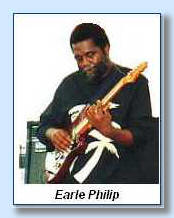 The passage which he quotes is John 4:4, which reads like this: “They that worship the Father must worship Him in spirit and in truth.” (King James Version). He maintains that cultural context is important. The Trinbagonian must worship in the ways of the culture to which he belongs, if he is to be truthful firstly to himself and secondarily to God. He states that the best medium for the salvation of souls is within that cultural context. He continues by saying that Jesus himself was a Calypsonian. This he justifies by saying that a Calypsonian sings about his surroundings. The Calypso is a topical song. He creates His commentaries out of His immediate context. His calypsoes are therefore shaped from the community.
Jesus also, drew object lessons from His surroundings. He related to people on their level. To the fishermen, He spoke of being fishers of men, to the gardener, He spoke of wheat and tares. Likewise with Him as our example, the gospelypsonians speaks to the Trinidadian in his language and that language is Calypso.
(Personal Interview with Earl Phillips, 16th March 1995).
The theory of Local Theology can and must therefore be applied to the musical context. The Trinbagonian has allowed the culture of the missionaries to become his own culture. He has accepted not only the Gospel according to Jesus Christ, but also the Gospel according to the Americans and the British. The author of this thesis found it curious that two of the informants without prompting spoke of this idea of stripping of culture which occurs when a person becomes a member of a Christian assembly.
Rev. Lealand Henry suggests that: “...until the Church understands that God is not an American and God is not English, but God is Trinidadian as He is Vincentian and Guyanese...then we will be able to enjoy what we can do as a people in terms of our expression of the gospel.”
(Personal Interview with Lealand Henry, 21st February 1995)